Family Meeting – Lesson 5
Each of you should bring these tracking sheets with your entries:
- Our Consequences Tracking Forms
- Behavior and Consequence Tracking Forms
- Rewards Tracking Sheet (from previous lesson)
Welcome to week 5’s Family Meeting! This agenda is to help you organize your meeting and family practice session. It includes skills to practice from the week’s lessons, plus SFP activities each person did during the week. You can print this agenda, or have it on a phone, tablet, etc. to look at during the meeting.
NOTE: We recommend you open Family Meeting Agendas on a laptop, computer or tablet during your meeting, so the whole family can follow along.
Family meeting rules:
- Use an agenda.
- One person talks at a time.
- Everyone gets a chance to talk, if they want to.
- No one puts anyone down.
- Keep it short and sweet!
Each week, during your Learn & Earn Lessons, each family member is asked to share ideas. The Family Meeting is a time to review those ideas.
At every meeting:
- Compliments: Say something you like about each person
- Calendar: List activities or events each person has scheduled for the upcoming week
- Past Business: Discuss your SFP activities progress and rewards
- New Business: Discuss current SFP goals and practice skills
- Value Message: Share pro-social family beliefs
- Have Fun! Games and treats
Repeat This Week’s Power Phrase:
Punishment creates resentment and doesn’t produce lasting change, while Positive Discipline produces long-term good behavior, and better family relationships.
Agenda Item #1: Negative Behaviors and Consequences
Review
This week you learned the importance of the family choosing negative consequences ahead of time and putting them in three categories according to the seriousness of the “offense.” This helps parents not over-react in the heat of the moment. It also lets kids know what to expect and gives kids a “say” in what consequences they receive.
Directions
Negative Consequences. When a child chooses to misbehave, the parent is to calmly give a negative consequence. Consequences are to be decided ahead of time with input from the children, and fit the size of the misbehavior. They need to include a “response cost”–the time, effort, money, or skill practice the child needs to do to “make it right. A negative consequence is effective when it helps bring about long-term positive change in a child’s behavior, while preserving a loving relationship.
Negative Behaviors. What behaviors are you specifically targeting for correction? Don’t try to correct them all at once! Everyone can be more successful if you start with just a few specific behaviors.
Warning Cue: As a family, decide on a simple warning cue. It can be a single word or phrase, like “you MUST …” The word MUST is the warning cue in this example.
If a parent asks a child to do something (or stop doing something):
- The first request should be a polite “Child’s Name, will you please … ?”
- After a reasonable time to respond has passed, then the parent can use the warning cue “Child’s Name, you MUST…”
Right now, agree upon a warning cue, and write it down for the family to remember.
Our Targeted Behaviors.
Fill in the behaviors and consequences you are targeting. As your family needs change, you can modify these. If you prefer, write these on a sheet of paper instead: you just need the behavior, and the resulting consequence. Chose a few specific behaviors that you hope to have kids stop doing (and only when positive practices are not working!)
Lesson: 9 min:1 mid:3 max:5
Agenda Item #2: Positive Discipline
Review
Positive Practice. Positive practice involves teaching children the specific steps of the pro-social behaviors you want them to adopt and having them repeatedly practice the behavior. It can be used to teach children the skills you want them to learn, or also used to correct misbehavior.
Warning Cue. A Warning Cue is word or phrase that lets the child know a negative consequence is coming next. It can be a word like “you NEED …” The word NEED is the warning cue. If a parent asks a child to do something (or stop doing something) the first request should be a polite “[Name], will you please … ?” After a reasonable time to respond, the parent uses the Warning Cue “[Name], you NEED to…” If a child doesn’t respond after the warning cue, the parent is to immediately — and calmly — give the negative consequence.
Positive Practices Chart:
Negative Consequences. A negative consequence is effective when it helps bring about long-term positive change in a child’s behavior, while still preserving a loving parent/child relationship. The difference between punishment and positive discipline is intent: the intent of punishment is to inflict pain; the intent of positive discipline is to train a child in positive, pro-social behaviors.
Punishment is ineffective because it does not bring about long-term change and it harms relationships so children don’t want to please you.
Choosing consequences ahead of time enables you to be fair (kids know what to expect), fit the consequence size to the misbehavior, and teach missing skills to help your child improve long-term behavior. Consequences should include a “response cost”–the time, effort, or money the child needs to give to “make it right.”
Chore Jar. You might have done an exercise of writing down ideas for “extra” chores for mild consequences. We’ve added the Chore Jar Activity this to the Bonus Family Activities list, to practice if you have time this week!
Calm Corrections. When a kid makes a mistake, adults may provide negative consequences. The negative consequence helps the child know they made a wrong choice, and helps them change behavior to have a happy, successful life.
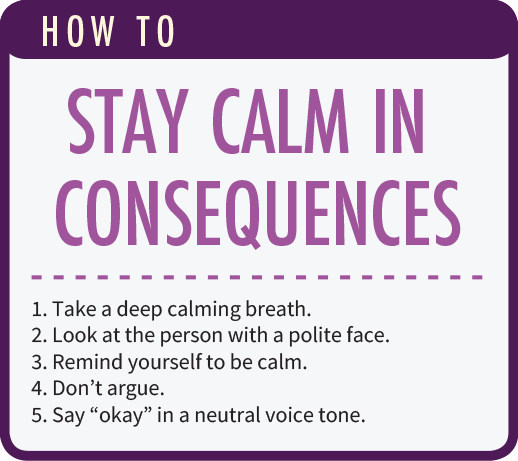
The consequences should be given kindly and calmly, and the child should stay calm, demonstrating self-control. The kids are tracking their responses to corrections to make sure they stayed calm. Adults will also be tracking corrections to be certain that they are giving calm corrections. The attitude and skills below help adults remain calm:
Attitude #1: I want to be a personal trainer for my child, not a punisher.
Attitude #2: Anger makes my brain less effective, distracts my kids from what I want them to learn, and harms relationships.
Attitude #3: I can choose to not be angry.
Skill #1: As soon as a child misbehaves, take a deep, calming breath before saying anything.
Skill #2: When a child misbehaves, think of it as a teaching moment, and ask yourself, “What skill is my child missing in this situation?”
Skill #3: Use this pattern to help you give calm consequences:
1) “I understand you feel . . . ” (Express empathy.)
2) “Just now you . . . ” (Use “Just now…” to say what they did wrong; never use the word “but”.)
3) “What you need to do is . . . ” (Tell the skill they should have used instead.)
4) “By choosing to . . ., you have earned a negative consequence of . . . “
5) “If you want to practice the skill of . . . right now, we will reduce the negative consequence to . . .”

Directions
Family members have been suggesting Minor, Medium and Major consequences that they think will be effective in their Family Activity. Here are the entries to date. If there are none listed, you can create them now.
Discuss, as a family, how calm corrections have been working out. Are kids taking corrections calmly? Adults giving corrections calmly? We’ll continue to monitor these in later meetings, so keep using the form until it becomes a habit for ALL family members to give and receive corrections calmly.
If there are none listed, work on this exercise together.
Oops! We could not locate your form.
Agenda Item #3: Add Consequences to the Rules Activity Form
Review
Together as a family, we create rules that establish rights and responsibilities, teach children pro-social values, and keep them safe. When children help make rules, they are more likely to follow them.
Directions
Use this form to add consequences for breaking family rules. Rules that are fair, firm, and consistently reinforced and enforced, help children feel more secure and develop better self-control.
Rules, Rewards and Consequences
Oops! We could not locate your form.
BONUS ACTIVITY: Pro-Social Skills for a Successful Life
(How to get along with people and be more successful in life)
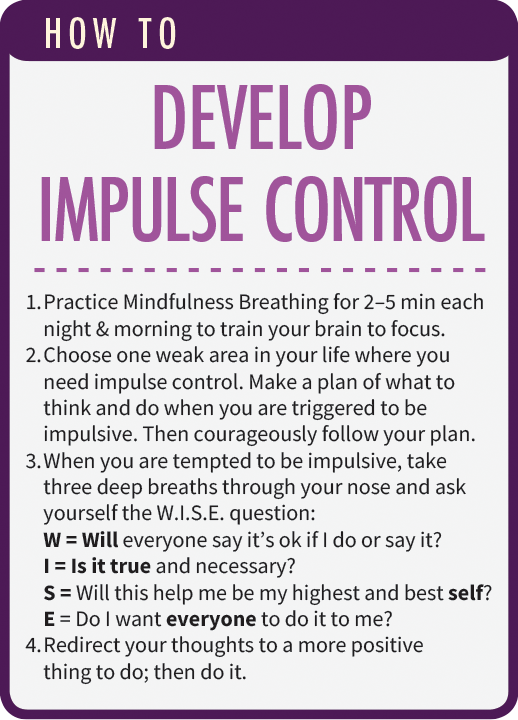
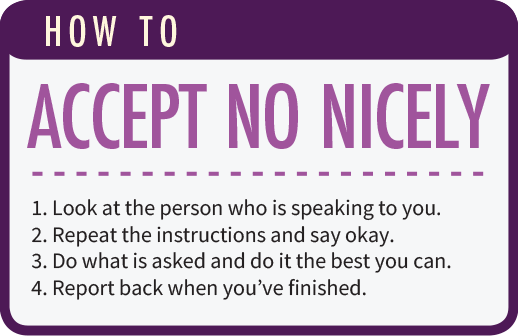
Social skills (see below) help children function well in society. It helps them develop “emotional intelligence” — the ability to manage emotions and respond in a pro-social way. If you have time in today’s Family Meeting (or some time during the week), help kids memorize the steps of each skill and practice different pretend situations using them. Reward them for practicing, and track and reward real-life performance. When kids forget to use the skills, have them do “Positive Practice.”
Social Skills