Each of you should bring these tracking sheets with your entries:
Dealing With Conflict Agreement (parents only)
Taming the Anger Monster Tracking Sheet
Welcome to week 7’s Family Meeting! This agenda is to help you organize your meeting and family practice session. It includes skills to practice from the week’s lessons, plus SFP activities each person did during the week. You can print this agenda, or have it on a phone, tablet, etc. to look at during the meeting.
NOTE: We recommend you open Family Meeting Agendas on a laptop, computer or tablet during your meeting, so the whole family can follow along.
Family meeting rules:
Use an agenda.
One person talks at a time.
Everyone gets a chance to talk, if they want to.
No one puts anyone down.
Keep it short and sweet!
Each week, during your Learn & Earn Lessons, each family member is asked to share ideas. The Family Meeting is a time to review those ideas.
At every meeting:
Compliments: Say something you like about each person
Calendar: List activities or events each person has scheduled for the upcoming week
Past Business: Discuss your SFP activities progress and rewards
New Business: Discuss current SFP goals and practice skills
Value Message: Share pro-social family beliefs
Have Fun! Games and treats
Repeat This Week’s Power Phrase:
Each of us can become a peacemaker by re-programming our anger habits with pro-social behaviors.
Agenda Item #1: Skills to Reduce Family Conflict
Review
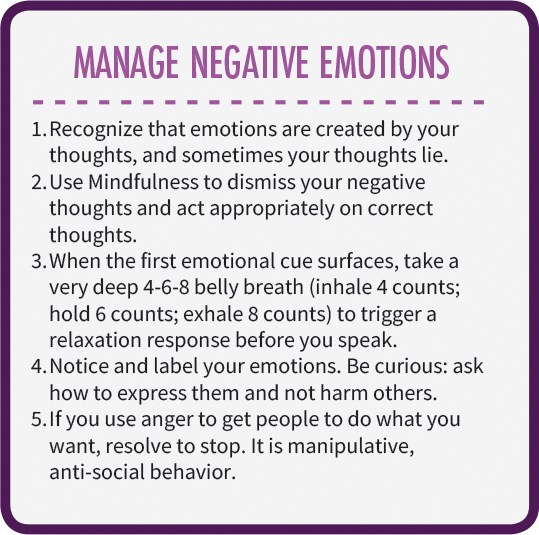
Managing Stress: By now you have learned about, and practiced, various Mindfulness Exercises. Don’t forget to try them all on the My Mindfulness page. (Bonus: the more you practice, the more tickets you earn for upgrading your home base!)
Directions
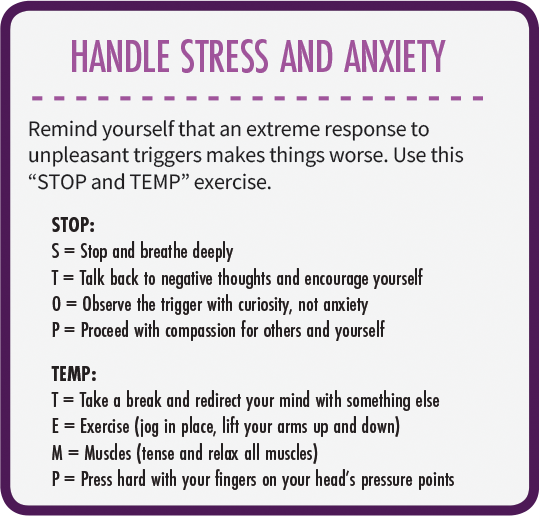
Take a few moments to talk about what causes your family stress. This week, think about what you can do to help reduce stress. Here is a printable handout, or you can find the online version in the handouts section.
Agenda Item #2: Face Up to Your Feelings
Review
Face Up to Your Feelings. This week your kids practiced understanding emotions, using a tool we call “Face Up To Your Feelings.” Use this activity to help your child understand and label their emotions and express them in pro-social ways. Research shows kids do better when parents regularly use emotion coaching with them. They have better physical health, better grades, fewer behavior problems, and are more emotionally resilient than children whose parents don’t use and teach the skill.
Directions
Plan a time to discuss. This week, choose a time to discuss feelings and work on emotional coaching. This can be done during My Time (if that is what your child wants to do), or another time when you have shared free time.
You can use this handout to use during your discussion.
Oops! We could not locate your form.
Agenda Item #3: Taming the Anger Monster
Review
Taming the Anger Monster Tracking Activity. Both parents and kids had a chance to try out the Anger Monster Tracking Activity. This anger tracking form is a tool you can use to track what makes you angry and how you respond. Evaluate yourself at the end of each day for at least a month to establish new patterns of awareness and improved responses to stress and anger. It really works! Rather than reviewing your anger responses as a group, discuss how you will use this tool, and what you learned about managing anger in your lesson. Here is what the tool asks you to track:
Cause: What was the trigger that caused your anger? Angry thoughts: What were your Hot Thoughts you told yourself that made the anger worse? Body Reaction: How did your body feel? Flushed face; Tight throat; Clenched hands; Clenched teeth; Sweaty hands; Tight chest; Racing heart; Stomach pain; Felt like crying ;Other Reducers: What reducers did you try? Calming breaths; Counting backwards; Calm, pleasant imaging; Conscious muscle relaxing; Projecting and reflecting Reminder: What words did you think to calm your angry thoughts? Angry Response: What was your angry response? Calm Response: What is a better response for next time?
Directions
Did you track your feelings this week? Did it make you feel better to use these skills to help tame your anger? Did you notice any differences in your family this week?
If any family members have not had a chance, you can print and practice the “Taming the Anger Monster” tracking forms now!
Family Tracking Sheet:
Oops! We could not locate your form.
Stepping Out of Anger
In lesson 7 you learned about anger responses and methods for reducing anger. We have included the Stepping Out of Anger Activity as a bonus activity, to be done if you have time in today’s family meeting.
BONUS ACTIVITY: More Resources
There is so much that you can do on the subjects discussed in Lesson 7, that we included these additional bonus resources to download or print.
Stepping Out of Anger
You can always go back to the Resources page and find these to work on these.
Family Conflict Agreement
Are you willing to sign?
Lesson 7 is so packed full of information that we
PARENT NOTE: Reducing family conflict, so children grow up in a peaceful home, is important for good mental health. It takes several skills to reduce conflict.
Five Skills to Reduce Family Conflict:
Recognize, name, and express emotions in pro-social ways Identify things that cause stress and find ways to reduce them .
Use Mindfulness; trigger a Relaxation Response when stressed or angry.
Identify and track anger triggers, and decide on new pro-social responses.
Use “Stepping Out of Anger” to re-program your brain with the new responses.
Agree as a family to handle disagreements without insults or anger.
Our Dealing with Conflict Agreement. Conflict arises when family members disagree on how things should be done in a family, or are hurt or offended by how they are treated. This agreement is about handling disagreements without becoming angry or insulting one another.
Parents had a chance to sign during the lesson, but kids have not yet seen this. Please discuss the agreement. Anyone who has not yet signed can sign now!
Family Tracking Sheet:
Our Dealing with Conflict Agreement. Conflict arises when family members disagree on how things should be done in a family, or are hurt or offended by how they are treated. This agreement is about handling disagreements without becoming angry or insulting one another.
Parents had a chance to sign during the lesson, but kids have not yet seen this. Please discuss the agreement. Anyone that has not yet signed can sign now!
Dealing with Conflict Agreement
WE AGREE that what we want most long term for our family is to have warm and loving relationships.
WE COMMIT to not say or do anything that would harm our goal of a happy family.
WE AGREE that when we have a disagreement or concern and we begin to feel angry or upset over it, we will choose a specific time to sit down together and discuss it.
WE AGREE to adopt the Strengthening Families Program attitudes of respect, kindness, generosity, patience, and peace in dealing with one another.
WE will agree to a place for talk and discuss the best times for resolving conflicts.
WE will discuss what tools we will use to solve conflicts, such as: